WR Concrete logo
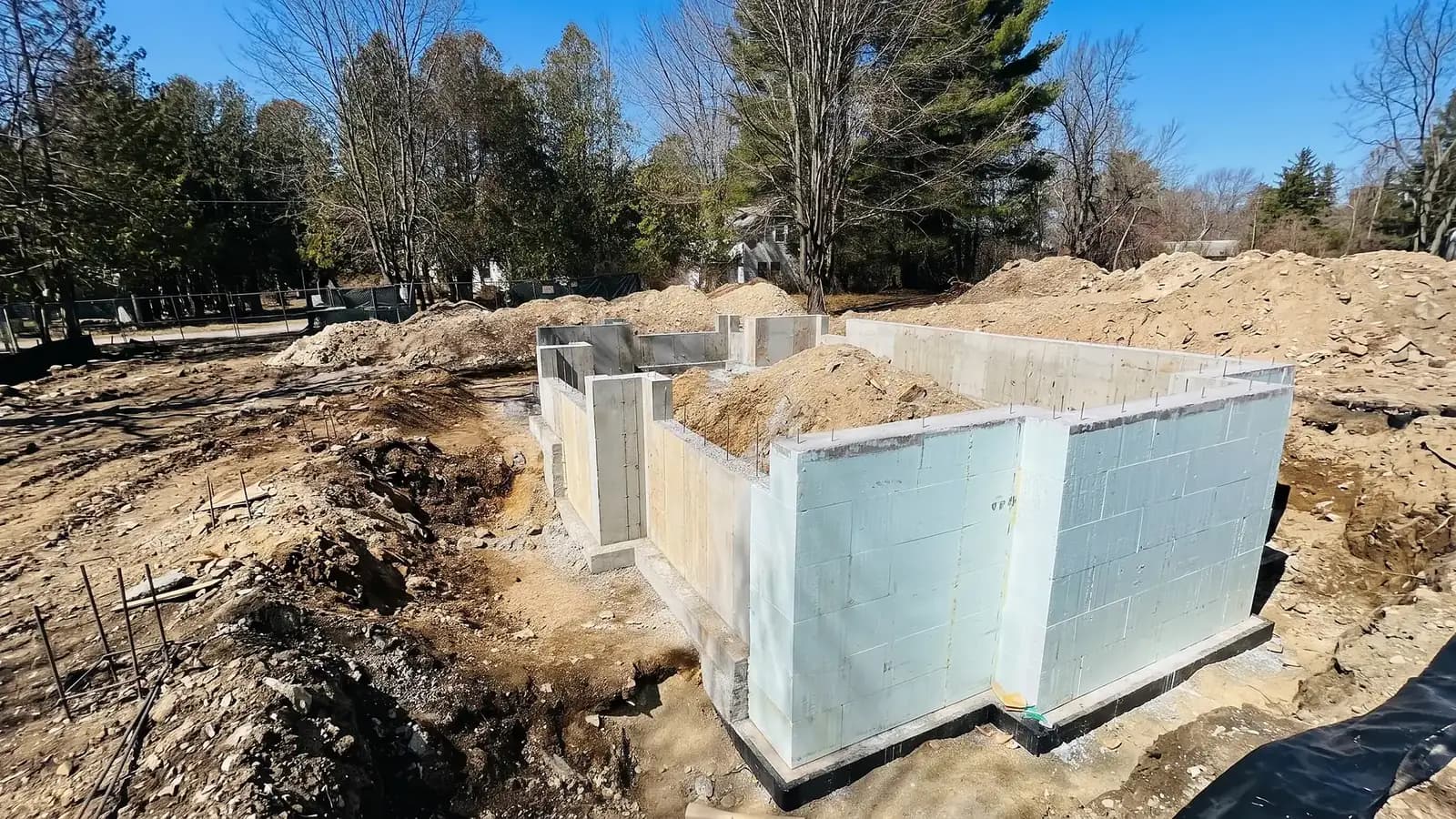
Concrete foundation under construction using Nudura ICF insulated concrete forms on a Massachusetts job site

Concrete Foundations · Massachusetts

Concrete Foundations Poured Right Across Massachusetts

Footings, poured walls and ICF foundations for new homes and additions, built on a base that's graded and compacted before a truck ever shows up.

The short answer

Who pours concrete foundations in Massachusetts?

WR Concrete pours foundations for new homes, additions and ICF builds across Massachusetts, based in Marlborough. The crew handles footings, piers and poured walls from excavation to final cure, and every project starts with a free estimate so homeowners and builders know what the site needs before any digging starts.
  • Fully insured: general liability and workers' compensation
  • Based in Marlborough, MA, serving all of Massachusetts
  • Free estimates on every foundation
  • Footings are typically set below frost depth, around 4 feet in Massachusetts

Concrete Foundations

Concrete Foundations built to last in New England

A foundation is the one part of the house nobody sees once the siding goes up, and it's the one part that can't be fixed cheap if it's done wrong. WR Concrete pours footings, piers and full foundation walls for new homes and additions across Massachusetts, including insulated concrete form (ICF) builds, and treats every pour the same way: get the layout and grade right first, compact the base, form it square and plumb, then pour and finish clean.

Wesley has spent close to 15 years working with concrete, and that shows up most on foundation jobs, where a quarter inch out of plumb on a wall can turn into a framing headache a month later. Whether it's a footing for a small addition behind an existing house, a full foundation for new construction, or piers for a deck or porch, the approach stays the same: no shortcuts on the base, no rushing the forms, and a job site that's cleaned up when the crew leaves.

What is included

  • Site layout and excavation coordination for footings and foundation walls
  • Footings and pier foundations, including frost-depth footings
  • Poured concrete foundation walls, square and plumb
  • ICF (insulated concrete form) foundation installation
  • Foundations for additions, garages and new home construction
  • Waterproofing and drainage coordination at the foundation wall
  • Form stripping, backfill coordination and site cleanup
(774) 606-6807

Square forms, clean edges, a careful finish and a job site left clean.

Footing depth and why Massachusetts frost matters

Footings carry the entire weight of the house down into soil that won't shift, and in Massachusetts that means getting below the frost line. Frost depth here typically runs around 4 feet, though it varies by town and by how exposed the site is, so the local building department sets the exact requirement for a given lot. A footing poured too shallow can heave when the ground freezes and thaws, which shows up later as cracks in the wall above it or a door that suddenly won't close right.

Before any concrete goes in, the trench gets checked for depth, for soil that's solid enough to bear the load, and for any standing water that needs to be dealt with first. Footings for additions and new foundations get sized to the load above them, whether that's a single-story addition or a full two-story home, and piers for decks or porches get set the same way: deep enough to sit below frost, on soil that's been checked, not just eyeballed.

Poured walls versus ICF foundations

A traditional poured concrete wall uses removable forms, steel reinforcement set to the engineer's spec, and a mix that's right for the job, often air-entrained so the wall holds up through Massachusetts freeze-thaw cycles. The forms come off once the concrete has cured enough to hold its shape, and the wall gets waterproofed below grade before backfill goes against it.

ICF, insulated concrete form, foundations use foam forms that stay in place permanently, giving the wall built-in insulation on both faces along with the structural strength of the poured concrete core. ICF has become a common choice for new construction in Massachusetts because it cuts down on heat loss through the foundation, which matters through a long New England winter. Either method needs the same careful layout and bracing before the pour. The right choice usually comes down to the design, the budget and what the builder or homeowner wants out of the finished basement, which gets sorted out during the free estimate.

Curing, backfill timing and waterproofing

Concrete doesn't reach full strength the day it's poured. It's typically firm enough to walk near within a day or two, but a foundation wall needs real cure time, often around 28 days to reach full design strength, before it's ready to take the full load of backfill and framing pushing against it. Backfilling too early, or backfilling unevenly on one side, is one of the most common ways a foundation wall gets stressed or cracked before the house is even finished.

Waterproofing goes on the exterior face of the wall below grade, and drainage, whether that's a footing drain, gravel backfill or a sump system, needs to move water away from the foundation instead of letting it pool against it. Getting the grading right around the finished foundation, so water sheds away from the house instead of toward it, is part of the job, not an afterthought handled later.

How it works

Our concrete foundations process

01

Free Estimate and Project Review

The free estimate covers grade and access, footing depth, wall height and whether ICF or a traditional poured wall fits the project best, based on the details of your project. No cost, no pressure.

02

Layout, Excavation and Forms

The footprint gets laid out and excavated to the right depth, the base gets compacted, and forms go up square, plumb and braced before any concrete arrives on site.

03

Pour and Finish

Concrete is placed, vibrated to remove air pockets, and finished. Reinforcement, control joints and waterproofing go in exactly where the foundation needs them.

04

Cure, Backfill and Walkthrough

Forms come off once the wall has cured enough to hold its shape, backfill goes in evenly once the wall is ready for it, and the site gets cleaned up before the crew walks the finished foundation with the homeowner or builder.

Real WR Concrete work

Concrete Foundations from our job sites

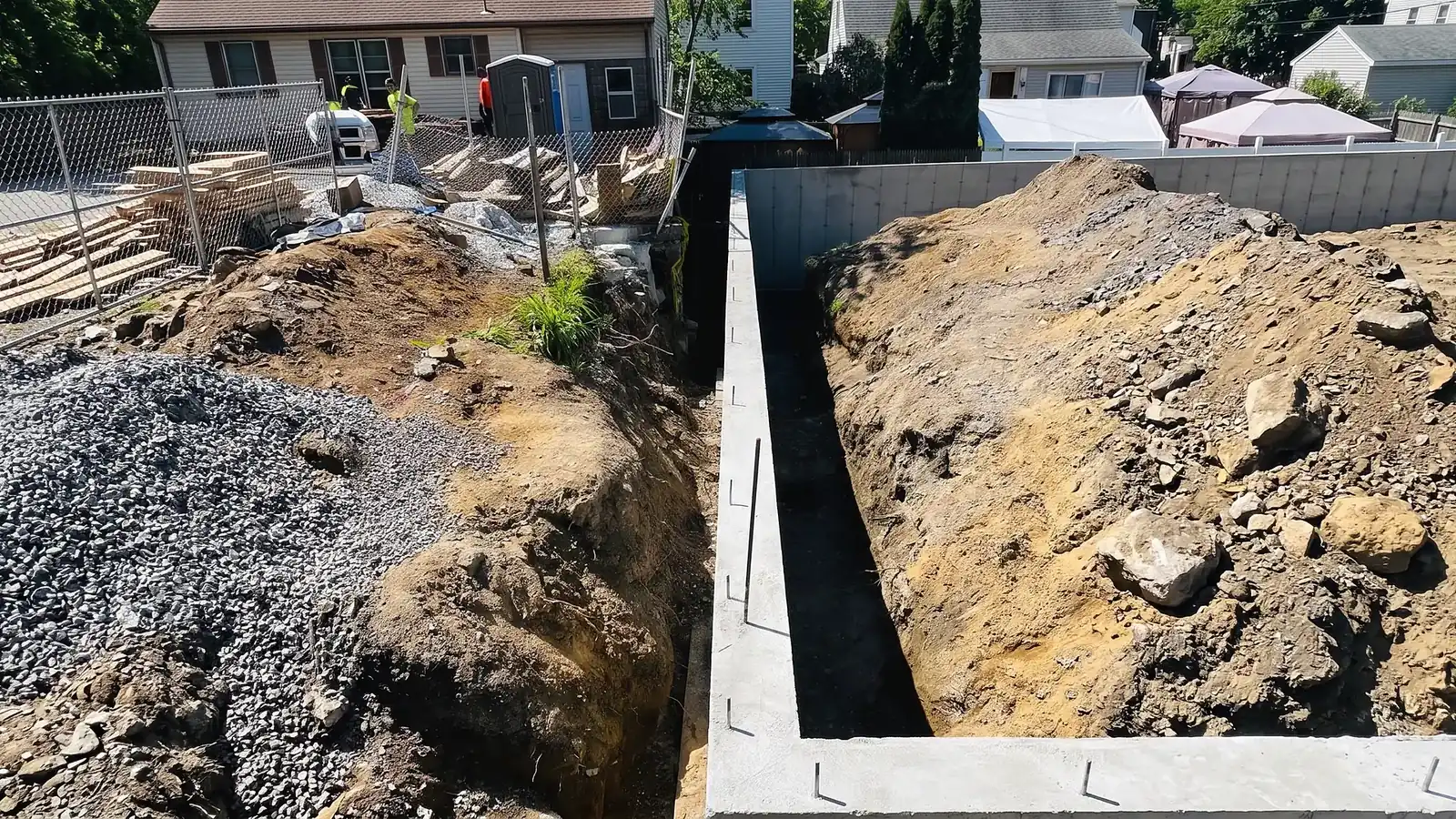
Trench excavation underway for a new concrete foundation wall installation
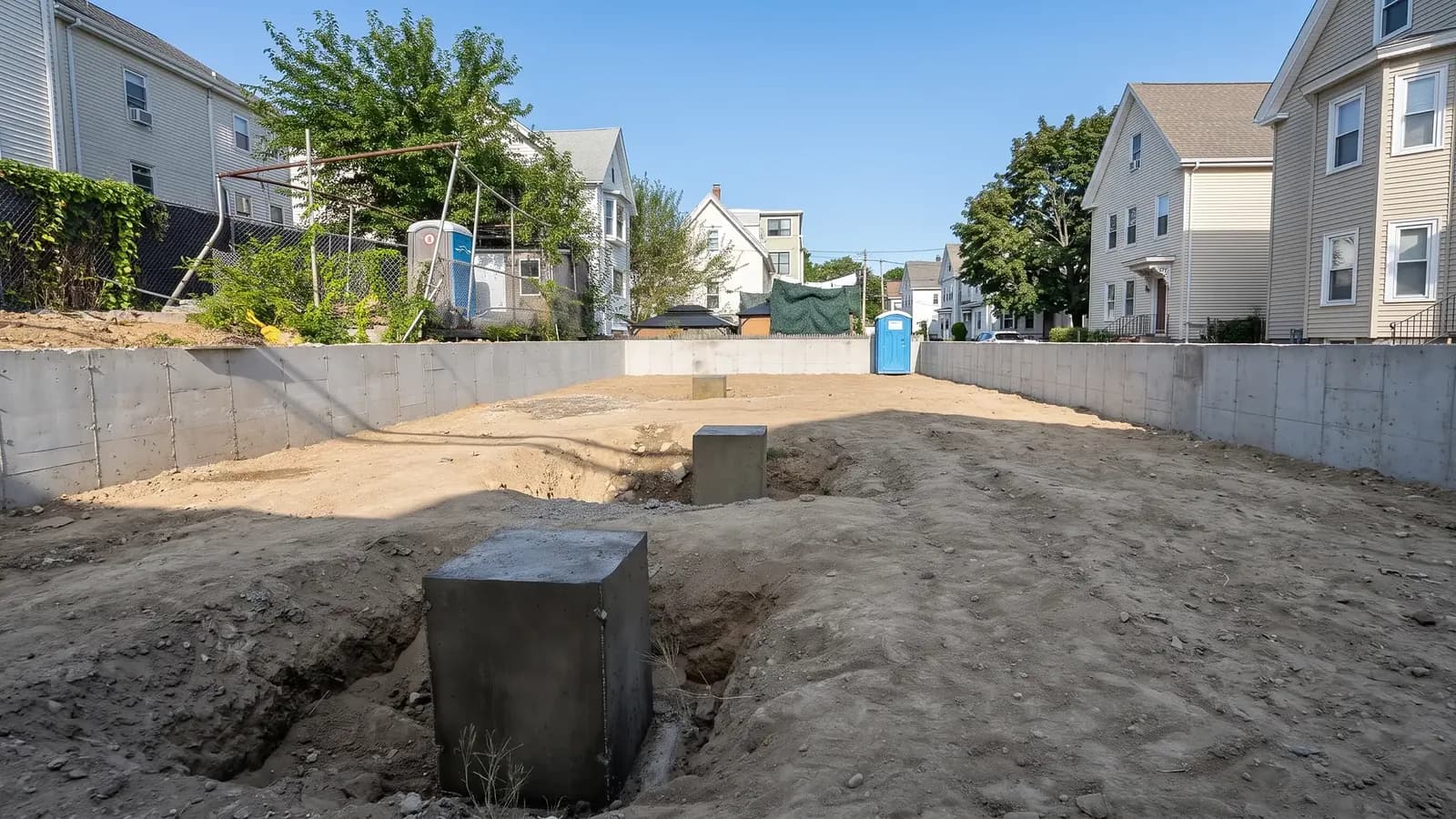
Concrete pier footings being formed as part of a foundation construction project
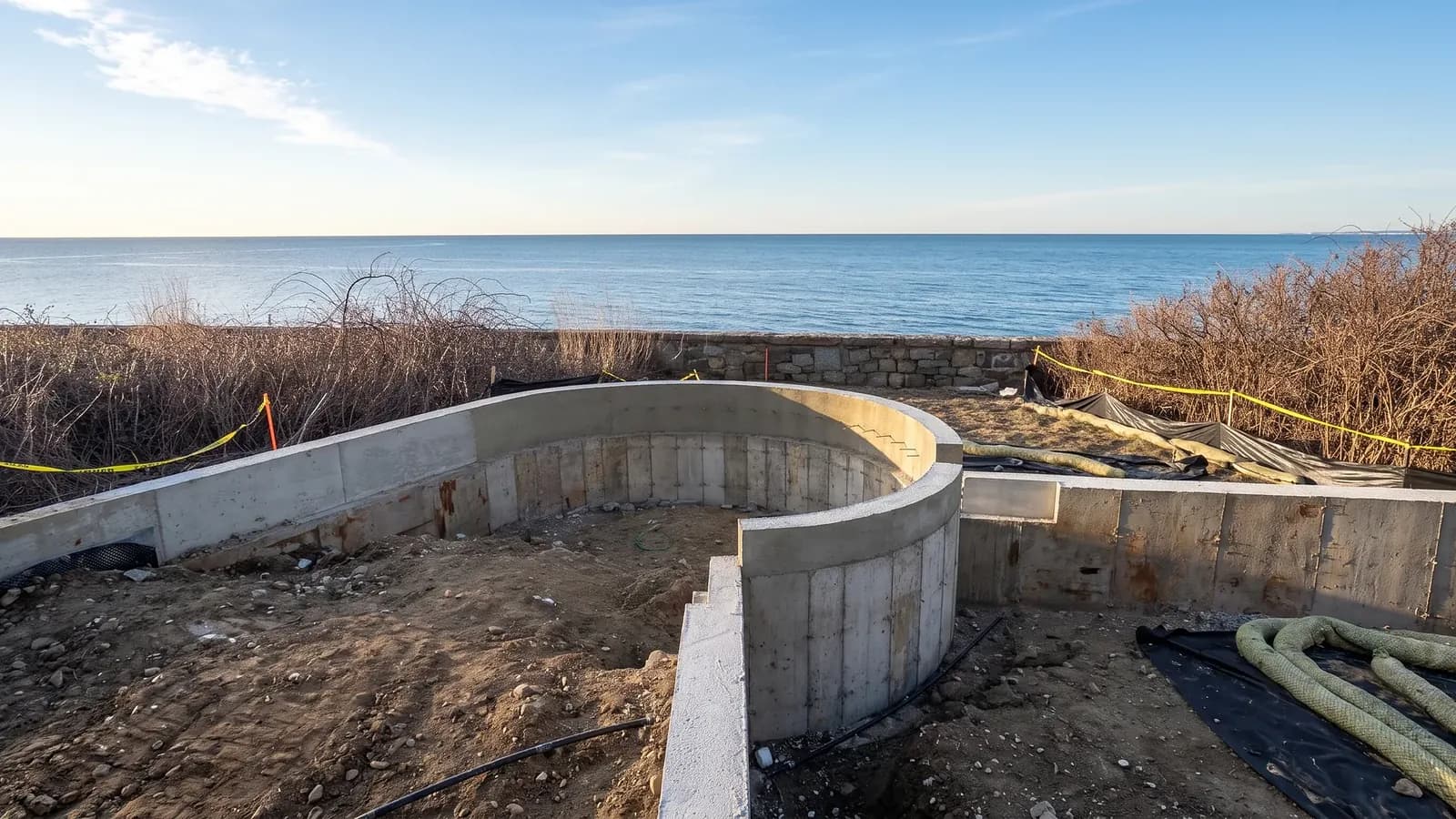
Curved concrete foundation wall under construction near the Massachusetts coastline
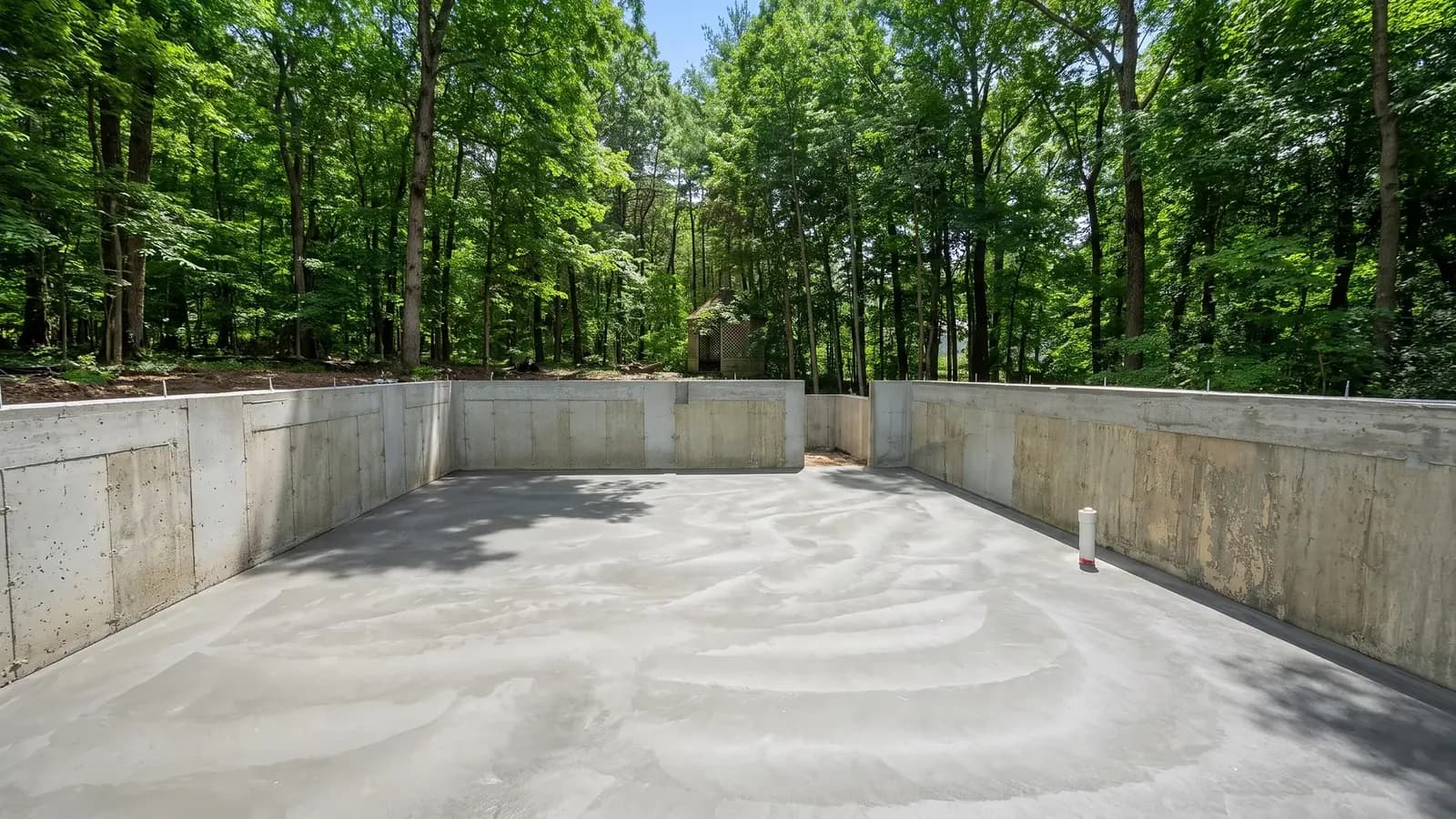
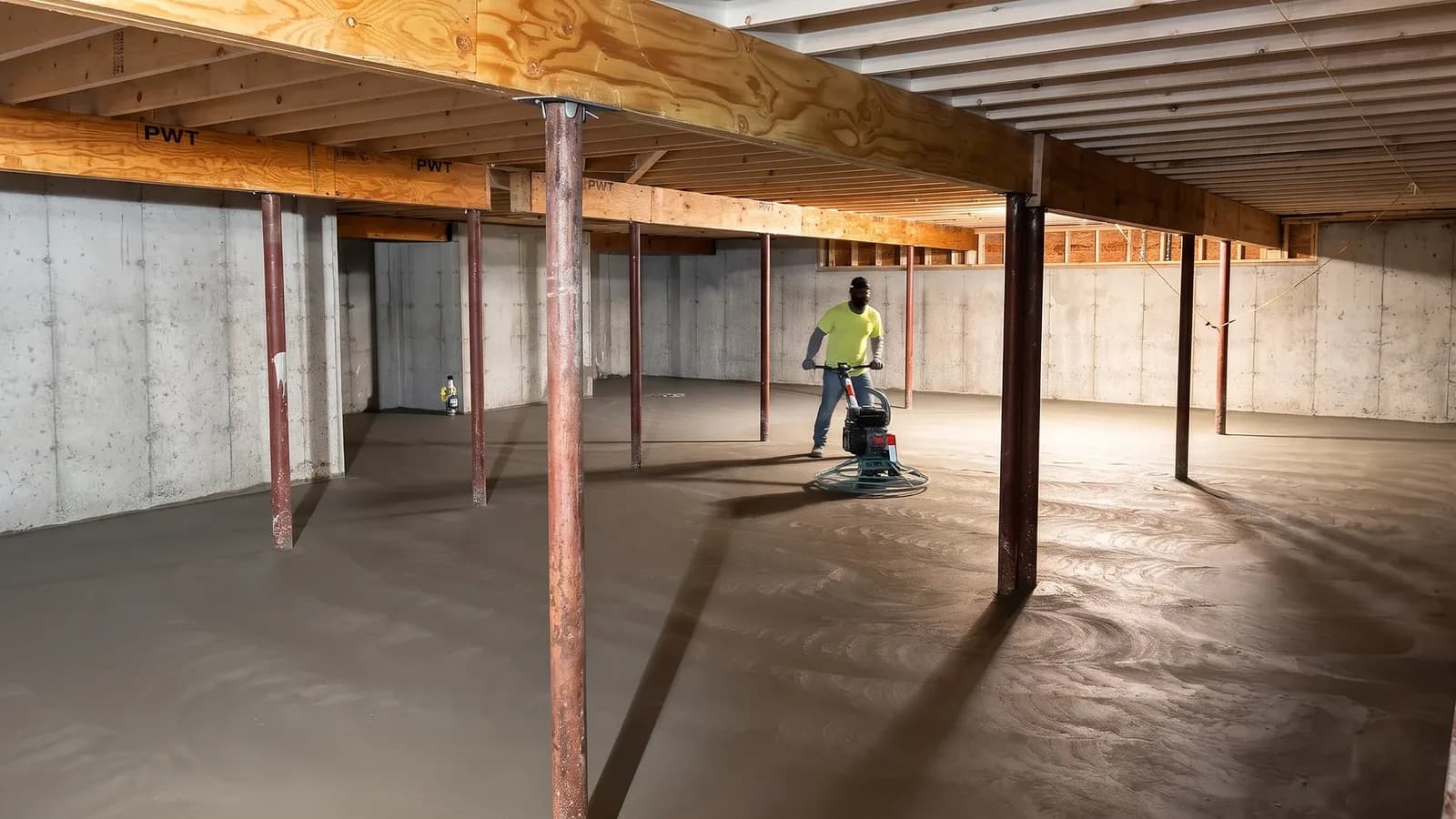
Freshly poured concrete foundation for a home addition project
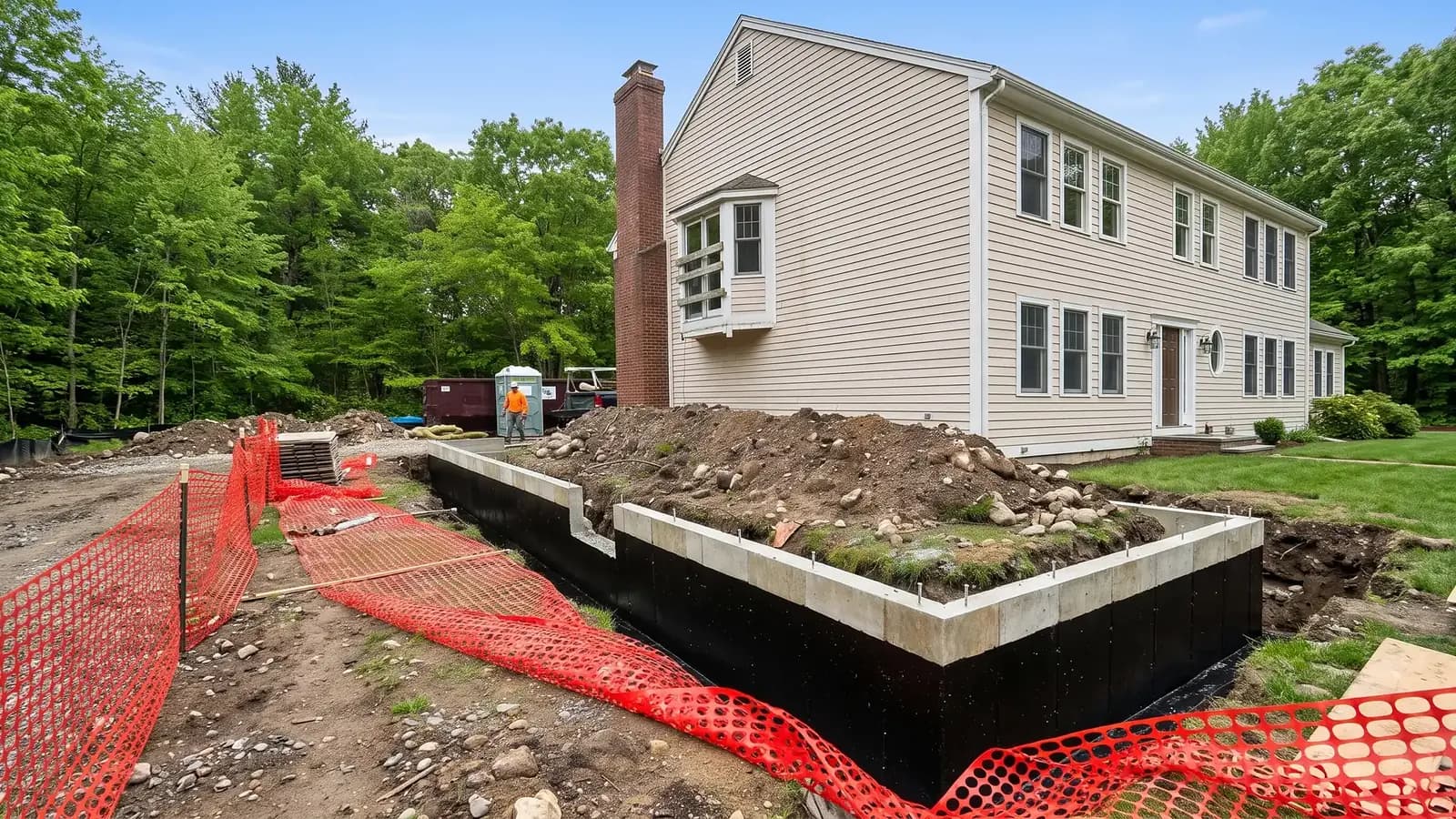
Waterproofed concrete foundation wall after installation, ready for backfill

Concrete Foundations: common questions

Footings in Massachusetts typically need to sit below the frost line, which runs around 4 feet deep in most of the state, though the exact depth depends on the town and the specific site. Permit requirements vary by town, and the local building department sets the final number for a given lot. WR Concrete checks this during the free estimate before any excavation starts.
A poured wall uses removable forms and reinforced concrete, while an ICF (insulated concrete form) foundation uses foam forms that stay in place and add built-in insulation to the wall. Both methods create a strong foundation; ICF adds energy efficiency that matters in a Massachusetts winter. Which one fits a given project usually depends on the design and budget, which gets discussed during the free estimate.
Foundation cost depends heavily on size, wall height, footing depth, site access and whether it's a poured wall or ICF. Most homeowners see a wide range depending on these factors, so there's no single number that applies to every project. WR Concrete gives a free, no-obligation estimate based on the details of your project.
A foundation wall needs real cure time before it can safely take backfill pressure. Concrete firms up enough to handle light contact within a day or two, but it typically needs closer to its full 28-day cure window before backfill goes against it at full height, especially on taller walls. Rushing this step is one of the most common causes of wall stress and cracking.
Yes. WR Concrete pours footings and foundation walls for additions, garages and new construction across Massachusetts. An addition footing still needs to go below frost depth and tie in properly with the existing structure, which is part of what gets reviewed during the free estimate.

Service areas

Concrete Foundations across Massachusetts

Based in Marlborough. Choose your town for local details.