
The Best Time of Year to Pour Concrete in Massachusetts
· By Wesley Martins da Rocha
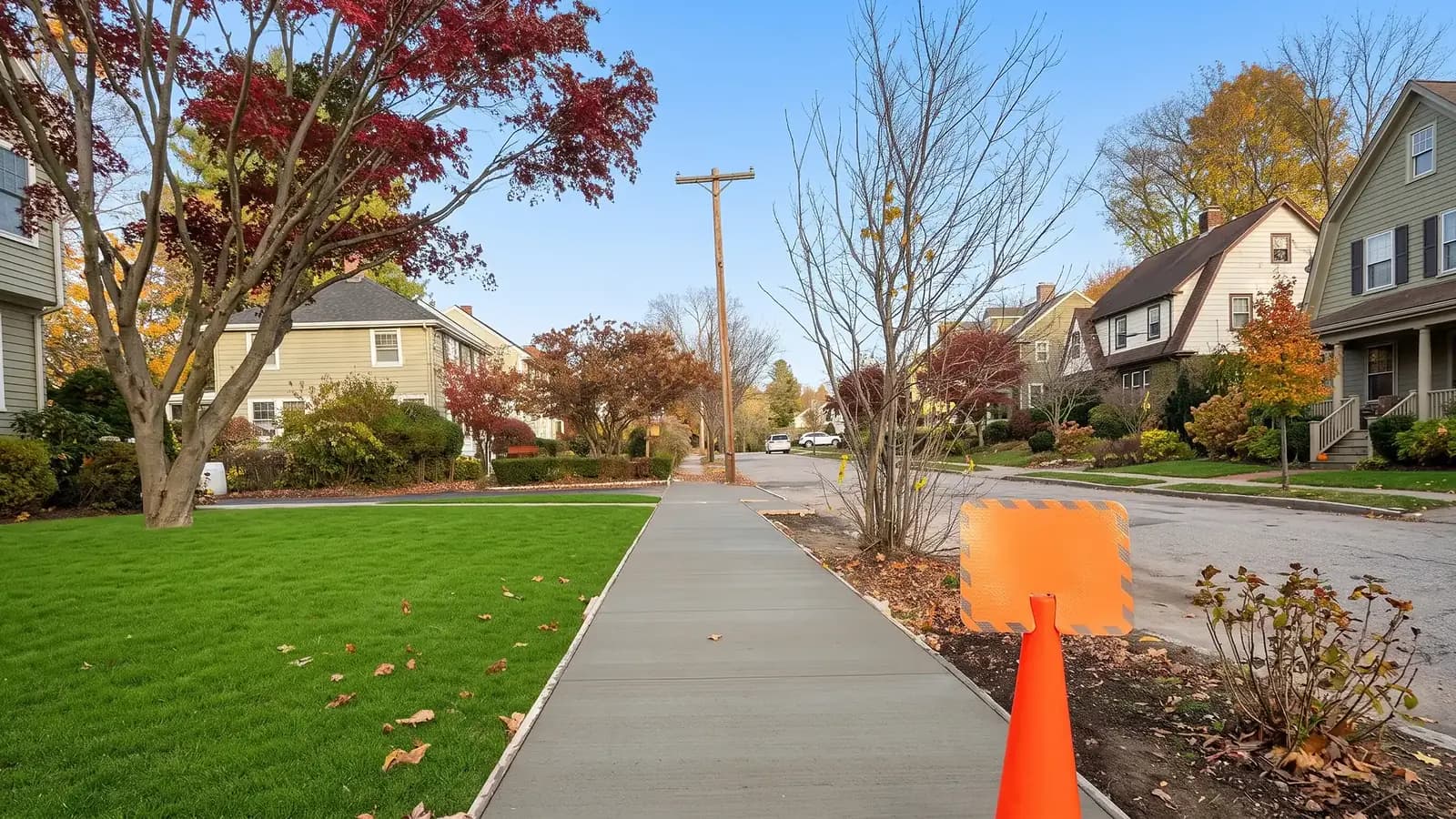
Concrete does not care what the calendar says, it cares about temperature, moisture, and how long it takes to set up and cure. In Massachusetts, where a single year can swing from a muddy March thaw to a dry August heat wave to a January cold snap, timing a pour right makes a real difference in how the finished slab holds up.
There is no single month that is "best" for every project. Each season brings its own tradeoffs, and a crew that knows how to work around them can pour concrete almost any time of year in Massachusetts. This guide walks through what changes season by season and how to think about scheduling around landscaping or a pool install.
Spring: good light, but mud and groundwater get in the way
Spring sounds like the obvious choice. Temperatures are moderate, the worst of winter is gone, and there is plenty of daylight to work with. The catch in Massachusetts is the ground itself. As frost comes out of the soil through March and into April, the subgrade underneath a driveway or patio can stay soft and saturated for weeks. Pouring on top of unstable, waterlogged ground is one of the fastest ways to end up with cracking or settling later.
A crew working in spring needs to check that the base has actually dried out and compacted properly before any concrete goes down, not just that the frost is gone. Heavy spring rain is also common in this part of New England, so pours are often planned around forecast windows. Late spring, once the ground has firmed back up, tends to be more reliable than the first mild week in March.
Summer: fast setting and faster drying need management
Summer gives you the most predictable weather window of the year, but heat changes how concrete behaves. Warm air and direct sun speed up the chemical reaction that makes concrete set, which shortens the window for finishing work like edging and stamping. On a hot, dry, windy day, the surface can also dry out faster than the concrete underneath is curing, which leads to surface cracking if nobody manages it.
For stamped concrete patios and pool decks, which depend on the surface staying workable long enough to get a clean pattern, summer pours are often timed for early morning to avoid peak heat. Keeping the slab moist in the first few days matters more in July and August than in any other season.
Fall: the sweet spot most Massachusetts contractors prefer
September through early November is usually considered the sweet spot for concrete work in Massachusetts. Daytime temperatures are moderate, nights have not yet dropped into hard freezes, and the ground has had all season to dry out and stabilize. That combination gives concrete a steady, even cure without the rushed set of summer heat or the slowdown of cold weather.
It is also a popular season for homeowners finishing up landscaping, driveways, and patios before winter, so fall calendars fill up. Requesting a free estimate a few weeks ahead, rather than waiting until the week you want the work done, generally gives more flexibility on timing.
Winter: pouring concrete in cold weather is possible, with the right steps
Concrete can be poured through a Massachusetts winter, but it takes real precautions. Water in the mix needs to stay above freezing long enough for the concrete to gain enough strength to resist frost damage, otherwise ice crystals can form inside the mix and weaken it permanently. The standard toolkit for cold-weather pours includes an air-entrained mix (more on that below), adjusting the concrete temperature at batching, and protecting the pour after it is placed.
On site, that protection usually means insulating blankets laid directly over fresh concrete to hold heat in, or in some cases a temporary heated enclosure for larger pours like a foundation. An accelerating admixture can also speed up early strength gain. None of this is unusual, it is just extra planning, which is why winter pours typically need more lead time than a fall pour.
Ground frost and footing depth: why "when" also depends on "how deep"
For any project that includes a footing or foundation, timing is not just about the concrete, it is about the ground underneath it. Massachusetts frost can reach several feet deep in a cold winter, and footings need to sit below that frost line so freezing and thawing does not heave them. Typically that depth is around 4 feet, though it varies by town and soil, so checking your local building department is the right move.
This is one reason foundation work often gets planned for a window when the crew can excavate to the correct depth without fighting frozen ground on top.
Curing temperature matters more than pour-day temperature
A lot of homeowners focus on what the thermometer says on pour day, but what happens over the next week matters just as much. Concrete needs to stay above roughly 50 degrees Fahrenheit for several days to develop strength at a normal pace. Below that, the curing reaction slows down significantly, and well below freezing it can stop almost entirely unless the slab is protected.
In Massachusetts, air-entrained concrete, with microscopic air bubbles mixed in, is the standard choice for anything exposed to winter weather. Those air pockets give water inside the concrete somewhere to expand into when it freezes, instead of cracking the slab from the inside. It is a small spec detail that makes a big difference over years of freeze-thaw cycles.
Scheduling concrete around landscaping, pools, and other trades
Concrete rarely happens in isolation. A patio often needs to go in before or after landscaping grading, a pool deck has to work around the pool installer's timeline, and a driveway may need to wait on utility or grading equipment access. Getting the sequence backwards, like finishing landscaping right up to the edge of where a driveway will be poured, usually means redoing work.
The practical approach is to loop in your concrete contractor early, before the final date is set, so the pour can be slotted into the right spot in the project timeline. For a pool deck, that often means planning the concrete portion for spring or early summer so the pool is ready to open on time.
Planning lead time: book earlier than you think
Across every season, the biggest mistake is waiting too long to start the conversation. Fall books up because everyone wants to finish before winter. Spring has a narrow window once the ground dries out. Winter pours need extra lead time just to plan the cold-weather protection correctly.
Reaching out a few weeks to a couple of months ahead of when you want the work done gives the most room to land on a date that fits both the weather and the project sequence.
Frequently asked questions
- Can concrete actually be poured in a Massachusetts winter?
- Yes. Winter pours are common with the right precautions: air-entrained mix, insulating blankets or a heated enclosure to protect the fresh concrete, and sometimes an accelerating admixture to speed up early strength gain. It takes more planning than a fall pour, but it is routine work for a crew that does it regularly.
- What temperature is too cold to pour concrete?
- There is no single hard cutoff, but once air and ground temperatures drop well below freezing, extra steps like heated water in the mix, insulating blankets, and sometimes a temporary enclosure become necessary to keep the concrete curing properly. Below that, pours typically get pushed back or heavily protected rather than skipped outright.
- Is fall really the best season for concrete in Massachusetts?
- Fall is usually the most forgiving season because temperatures are moderate, humidity is lower, and the ground has dried out from summer. That said, spring, summer, and even winter pours all work fine with the right approach for that season, so fall is a preference, not a requirement.
- Why does spring sometimes delay a concrete project?
- As frost leaves the ground in spring, the soil underneath a driveway or patio can stay wet and unstable for weeks. Pouring on top of ground that has not compacted properly risks settling or cracking later, so some spring pours get pushed back until the base is solid.
- How deep do footings need to go in Massachusetts to avoid frost damage?
- Footings typically need to sit below the local frost line, which is often around 4 feet deep in Massachusetts, though it varies by town and soil conditions. Your local building department sets the exact requirement for your area, so that is the source to check before finalizing a foundation plan.
- How far ahead should I plan a concrete project?
- A few weeks to a couple of months ahead is a reasonable target, especially in fall when calendars fill up fast or in winter when cold-weather protection needs to be planned. Reach out for a free estimate early so the pour can be lined up with the right weather window and the rest of your project timeline.
Found this helpful? Make us a preferred source on Google.
Ready for an exact price?
Get a free, no-pressure in-home estimate. Real numbers for your home, not a phone guess.