
Concrete Patio vs Pavers in Massachusetts: Cost, Upkeep, and Winter Performance
· By Wesley Martins da Rocha
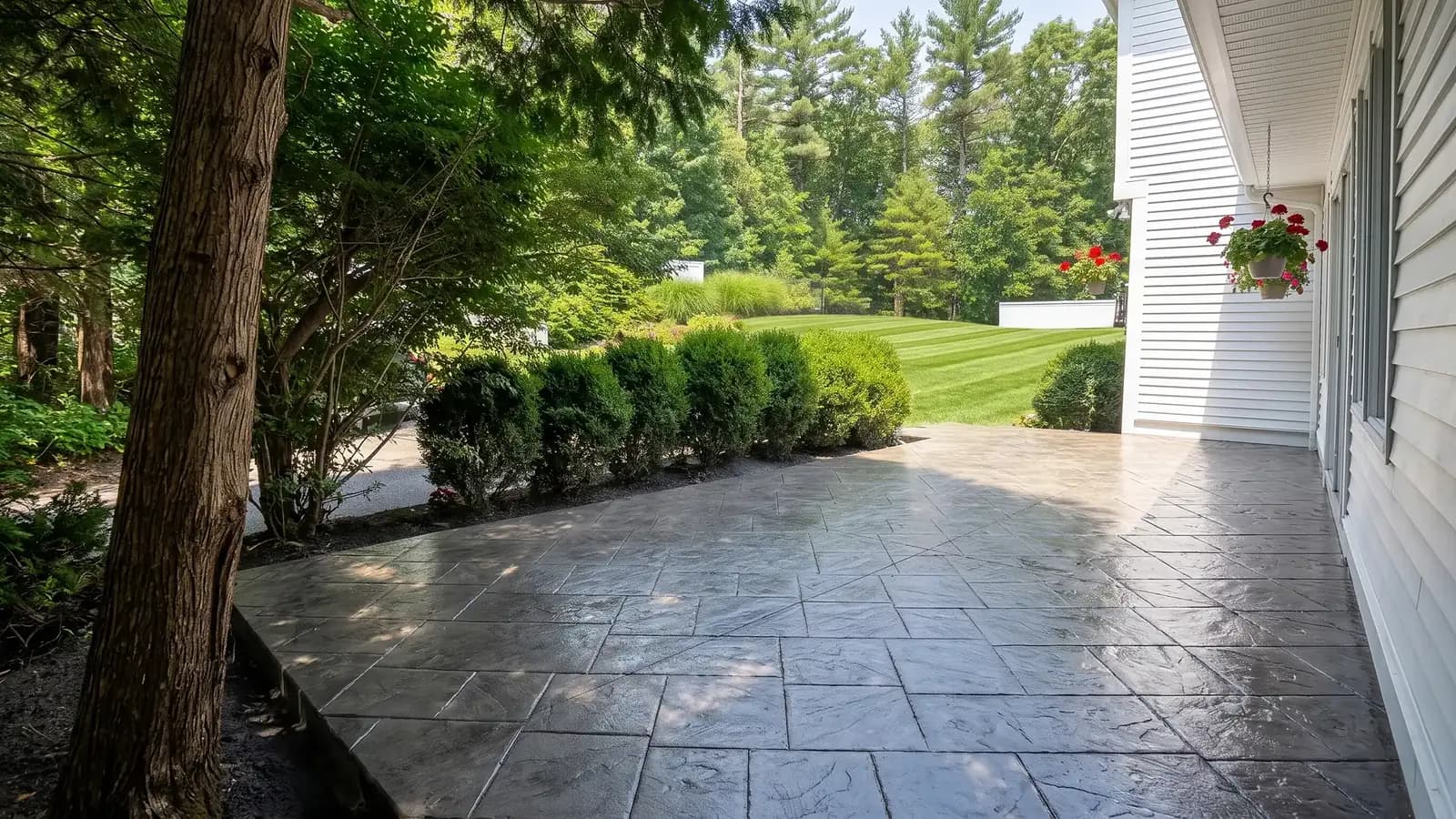
If you are planning a new patio in Massachusetts, the decision usually comes down to two options: a poured concrete slab or interlocking pavers. Both hold up in New England weather when they are built correctly, so the real question is which one fits your yard, your budget, and how much upkeep you want to deal with later.
This guide covers what each one typically costs, how they handle our freeze-thaw winters, what happens when something cracks or shifts, and the kind of look you can get with each. Neither option is automatically the "better" one; the right pick depends on your lot, how you plan to use the space, and your tolerance for maintenance. WR Concrete builds both concrete and stamped concrete patios across Massachusetts and walks homeowners through this tradeoff on a free estimate.
Upfront cost: how the two compare
As a rough guide, a poured concrete patio typically costs less per square foot than a comparable paver patio, mostly because concrete goes down as one continuous pour while pavers are set and compacted piece by piece. A basic broom-finished concrete patio tends to sit at the lower end of the range, while stamped or colored concrete narrows the price gap with pavers because of the extra steps involved in texturing and coloring the surface.
Pavers usually cost more upfront, but the price flexes a lot based on the product you choose. Basic concrete pavers are closer to plain concrete pricing, while natural stone or premium lines push the number up considerably. A simple rectangular patio also costs noticeably less than one with curves, multiple elevations, or a built-in fire pit area, and that holds true for both materials.
These are market-typical ranges, not a quote for your yard. Slope, drainage work, and excavation depth all move the number, so the only way to get an accurate price is a free estimate.
How each one handles a Massachusetts winter
Massachusetts gets real freeze-thaw cycles every winter, and that is the single biggest factor in how a patio performs over time. Water gets into tiny cracks or pores, freezes, expands, and pushes the material apart. This is called frost heave, and it is why the prep work under the patio matters just as much as what is on top.
A concrete patio resists this well when it is built with air-entrained concrete (concrete mixed with tiny air bubbles that give the freezing water somewhere to expand without cracking the slab), a properly compacted gravel base, and control joints cut in the right spots. Skip any of those steps and a concrete patio in Massachusetts is far more likely to crack or heave by its second or third winter.
Pavers handle frost heave a little differently. Because they are individual units with sand-filled joints between them, pavers have built-in flexibility: if the ground shifts slightly, pavers can move a bit without cracking the way a solid slab would. The tradeoff is that pavers can heave unevenly, creating a bumpy surface that needs occasional lifting and relaying. Both systems need a deep, well-compacted base in our climate; skimping on base prep is the most common cause of winter damage either way.
Joints, weeds, and everyday maintenance
Concrete patios have far fewer seams. Beyond the control joints (the intentional lines cut into the slab), there is no gap for weeds, ants, or sand loss, which makes day-to-day upkeep simple: sweep it, hose it off, and that is mostly it.
Pavers have joints between every single unit, and that is where most of the ongoing maintenance lives. Weeds and grass can work their way up through the joints over time, and the polymeric sand used to lock pavers in place can wash out in heavy rain or get disturbed by snow plowing, which means it needs periodic topping off.
On the plus side, paver joints give the whole surface a bit of permeability, letting some water drain through rather than run off, which can help in a yard that already struggles with drainage.
Sealing and surface care
Both materials benefit from sealing, but for different reasons. A concrete patio typically gets sealed to protect the surface from de-icing salt, oil, and moisture, and to keep a stamped or colored finish looking sharp. Most sealers need reapplying every couple of years, more often where salt exposure is heavy.
Pavers get sealed mainly to lock in the jointing sand, deepen the color, and make the surface easier to clean. Unsealed pavers still function fine structurally, but they fade and shed joint sand faster.
One note for both: go easy on rock salt on a brand-new patio during the first winter while everything cures and settles. Sand-based traction products are gentler on fresh concrete and paver sealants alike.
What happens when something cracks or shifts
Pavers have a real practical advantage here. If a few pavers crack, sink, or get stained beyond cleaning, a contractor can pull just those units, fix the base underneath, and reset them, and the patch blends in because the surrounding pavers are unaffected.
Concrete repair is less forgiving. A crack or settled section usually means patching a visible area or replacing the whole section to keep the surface looking uniform, since a patch rarely matches the color and texture of the surrounding slab perfectly. A properly poured and jointed slab with a good base underneath should not need this kind of repair for a long time, but it is worth knowing going in.
Look and style options
Pavers come in a huge range of shapes, colors, and patterns, from classic brick-style layouts to natural stone looks, and that variety is part of their appeal.
Concrete has caught up a lot on this front. A broom finish gives a clean, simple texture at the lower end of the price range. Stamped concrete presses a pattern into the surface before it cures, mimicking flagstone, cobblestone, or brick at a lower cost than the real material. Colored concrete, either integral color mixed into the batch or a surface stain applied after, adds tone without the seams of individual units. For a yard that wants a stone look without joint maintenance, stamped or colored concrete is usually the middle ground worth considering.
Which one fits your yard
A simple, budget-conscious patio on a flat, well-drained lot is usually a good fit for plain or lightly stamped concrete: lower cost, low upkeep, and a clean look. A yard with an irregular shape or tight curves around landscaping often leans toward pavers, since individual units are easier to cut and fit around obstacles than a poured slab.
A yard with soil that shifts noticeably season to season also benefits from the flexibility of pavers, as long as the base is built correctly. A yard where low upkeep matters most, think second homes or homeowners who do not want a seasonal chore list, usually leans toward concrete.
Lifespan on both comes down almost entirely to installation quality. A well-built concrete patio with the right base, air-entrained mix, and jointing can last decades in Massachusetts weather, and a well-built paver patio with proper base compaction lasts just as long, with the understanding that some joint sand and occasional releveling is part of the deal.
Frequently asked questions
- Is concrete or pavers cheaper in Massachusetts?
- Concrete is typically the lower-cost option per square foot for a basic patio, since it goes down as one continuous pour. Pavers usually cost more upfront, though the gap narrows once you compare stamped concrete against basic paver products. A free estimate is the only way to get an accurate number for your yard.
- Which one handles Massachusetts winters better?
- Both can handle freeze-thaw cycles well if they are built correctly. Concrete needs an air-entrained mix, a compacted gravel base, and control joints. Pavers rely on a deep compacted base and have some natural flexibility between units, but may need occasional releveling if the ground shifts.
- Do pavers really get weeds between the joints?
- They can, especially as polymeric jointing sand wears down over several years. Regular sweeping and resealing keeps this in check. Concrete does not have this issue since it is a continuous surface aside from the control joints.
- Can a cracked concrete patio be repaired without replacing the whole thing?
- Small cracks can often be patched, but matching the color and texture of the surrounding slab exactly is difficult, so some sections end up more visible than others. Pavers are easier to spot-repair since individual units can be pulled and reset.
- Can I get a stone look without using actual pavers?
- Yes. Stamped concrete presses a pattern into the surface during installation to mimic flagstone, cobblestone, or brick. It is a common middle ground for homeowners who like the paver look but want fewer joints to maintain.
- How do I know which option is right for my yard?
- It depends on your lot's shape, drainage, budget, and how much seasonal upkeep you want to take on. Call (774) 606-6807 or request a free estimate online to get a straight read on your yard before deciding.
Related services
Found this helpful? Make us a preferred source on Google.
Ready for an exact price?
Get a free, no-pressure in-home estimate. Real numbers for your home, not a phone guess.