
Concrete Work in Newbury, MA: Building Near the Coast
· By Wesley Martins da Rocha
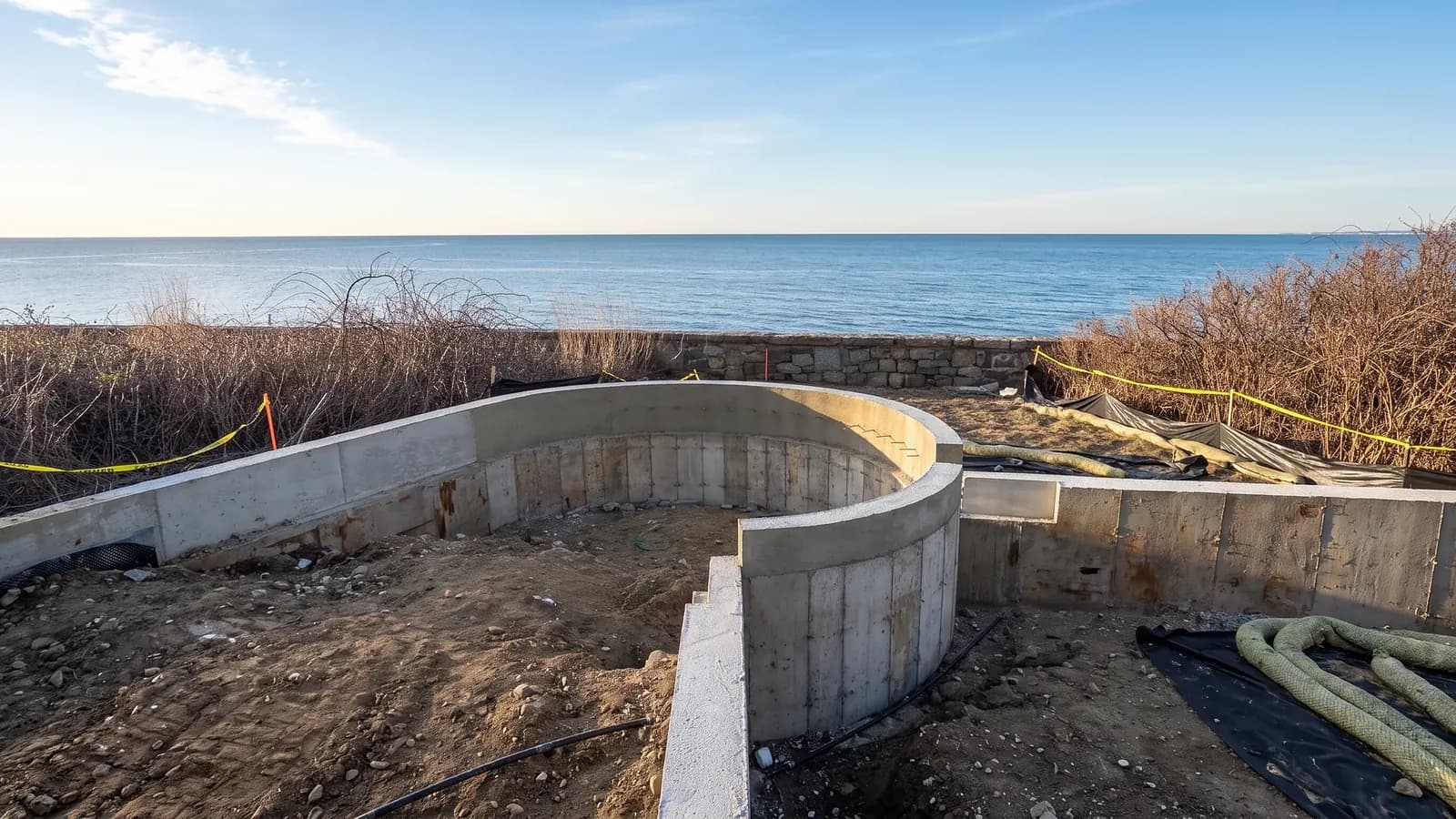
Newbury, Massachusetts sits right where the Parker River and the Great Marsh meet the Atlantic, and that location shapes concrete work here more than in most Massachusetts towns. Whether a project is tucked into Byfield inland, closer to Old Town near Newbury center, or out toward Plum Island, the ground, the air, and the water table all behave differently than they do a town or two inland.
This guide covers what makes concrete work in Newbury different, from salt exposure and sandy soil to flood zones near the marsh. WR Concrete has worked in Newbury and serves towns across Massachusetts, including the North Shore near Newburyport.
Newbury's geography sets the terms
Newbury is not one uniform piece of ground. Byfield, on the western side of town, sits further from the water and tends to have more typical New England soil and drainage conditions. Closer to Old Town and Newbury center, and especially out toward Plum Island, the land sits much closer to sea level, with the Parker River and the Great Marsh running through the landscape.
That range matters before a single yard of concrete gets ordered. A foundation or slab project in Byfield is closer to a standard inland job. A project near the marsh or the barrier beach side of town has to account for a higher water table, sandier or marshier soil, and in some spots, flood zone rules that do not apply a few miles inland.
Salt air and why it matters for concrete
Concrete anywhere near the coast is exposed to salt in the air, not just salt that gets tracked in from the road in winter. Airborne salt can work its way into concrete over time, and combined with the freeze-thaw cycles every Massachusetts winter brings, it accelerates wear on a slab, a walkway, or an exposed foundation wall faster than the same concrete would wear a few towns inland.
The main way to push back against that is air-entrained concrete, a mix with microscopic air bubbles built in that give water room to expand when it freezes instead of cracking the surrounding concrete. For exposed flatwork near the coast like a patio, walkway, or driveway, air entrainment is less of an upgrade and more of a baseline expectation.
Sandy and marshy soil near the water
Soil conditions shift fast as you move toward the water in Newbury. Inland and in Byfield, soil tends to be more typical of the region. Closer to the Parker River, the Great Marsh, and the Plum Island side of town, soil runs sandier and in some spots marshier, which changes how it compacts, how it drains, and how well it supports a foundation or a slab without extra prep.
Sandy soil drains quickly but can shift more than denser soil if it is not compacted properly before a footing or slab goes in. Marshy, wet ground near the marsh edge needs even more attention, since building on soil that holds water poorly supports weight is how a slab or footing ends up settling unevenly within a few years.
High water table and flood zones
Because so much of eastern Newbury sits close to the Parker River and the Great Marsh, the water table in parts of town runs much higher than it does further inland. A high water table changes how a foundation needs to be waterproofed and drained, since groundwater pushing against a foundation wall from a shallow water table is a different problem than seasonal rain runoff.
Flood zone designations near the marsh and the coast also come into play for some properties, and foundation requirements in a flood zone, like how high a structure needs to sit or how it needs to be built, are set locally and can vary by the exact lot and its flood zone designation. Requirements vary by property, so this is worth confirming directly with Newbury's building department and, where wetlands or the marsh are nearby, the conservation commission before finalizing a project.
Real experience building near the coast
WR Concrete has worked in Newbury and has also built a curved concrete foundation and retaining wall on an oceanfront property elsewhere on the Massachusetts coast, work that called for the same attention coastal concrete always needs: a mix built for salt and moisture exposure, careful attention to drainage so water has somewhere to go besides against the wall, and finishing that holds up to the kind of weather a property right on the water sees every season.
That experience carries over directly to Newbury, where a project near the marsh or the barrier beach side of town needs the same attention to the mix, the drainage, and the finish as any other property exposed to salt air and a high water table.
Sealing and drainage after the pour
A quality pour near the coast is only half the job. Sealing exposed concrete, whether it is a driveway, a patio, or a walkway, slows down how much salt and moisture actually penetrate the surface over time, and it is worth reapplying every few years in a coastal environment rather than treating it as a one-time step.
Drainage matters just as much. Grading a site so water moves away from a foundation or a slab, rather than pooling near it, is always important in Massachusetts, but it matters more in Newbury given how close the water table already sits to the surface in parts of town. Getting the grading and any footing drains right at the time of the pour is far easier than trying to fix drainage after the fact.
Access, timing, and getting around Newbury
Newbury sits along Route 1, with easy access to I-95 and right next door to Newburyport, which keeps the town well connected even though parts of it, especially out toward Plum Island, feel more rural and tucked away. That mix is worth factoring into equipment access when planning a project.
Like the rest of Massachusetts, concrete work in Newbury slows down once the ground freezes and picks back up in spring. For a property near the marsh or the coast, timing a pour around the weather is a detail a free estimate can sort out ahead of time.
What to look for in a contractor for a coastal project
Coastal concrete work rewards a crew that pays attention to detail: a clean finish that holds up once salt and moisture get involved, drainage that is planned before the pour instead of fixed after, and a job site that stays organized even on a tighter coastal lot. WR Concrete is fully insured and brings that same detail-oriented approach to every project, whether it is a foundation, a slab, a driveway, or flatwork near the water.
Marlborough, where the company is based, sits roughly 50 to 55 miles southwest of Newbury, and WR Concrete serves all of Massachusetts, so a project near the coast is well within reach. Every project starts with a free estimate.
Frequently asked questions
- Does concrete need to be different near the Newbury coast than inland?
- Yes, in important ways. Concrete near the coast benefits from air entrainment to resist salt and freeze-thaw damage, and foundations in low-lying areas near the marsh need extra attention to drainage and waterproofing because of a higher water table than most inland Massachusetts towns.
- Are there special rules for building near the marsh or the beach in Newbury?
- Requirements vary by the specific property, and coastal or wetland-adjacent areas often get extra review from the town, including the conservation commission where wetlands or the marsh are nearby. Specific rules and fees are set locally, so confirm directly with Newbury's building department and conservation commission before finalizing a project.
- Has WR Concrete worked in Newbury before?
- Yes. The company has worked in Newbury and has also built a curved concrete foundation and retaining wall on an oceanfront property elsewhere on the Massachusetts coast, so it is familiar with the demands of building near salt air and water.
- Why does sandy or marshy soil matter for a foundation near Newbury?
- Sandy soil drains quickly but can shift if it is not compacted properly, and marshy ground near the marsh edge holds water and supports weight poorly if it is not handled correctly. Both conditions change how a footing or slab needs to be built to avoid uneven settling later.
- How far is WR Concrete from Newbury?
- The company is based in Marlborough, roughly 50 to 55 miles southwest of Newbury, and serves all of Massachusetts, including towns along the North Shore near Newburyport.
- How do I get a price for a concrete project in Newbury?
- The best way is a free estimate. It takes into account the site, including the soil and drainage conditions specific to the lot, and puts together a number based on what the project actually needs. Call (774) 606-6807 or request a free estimate online.
Related services
Serving
Found this helpful? Make us a preferred source on Google.
Ready for an exact price?
Get a free, no-pressure in-home estimate. Real numbers for your home, not a phone guess.